
Radiation-Resilient Imaging for Extreme Environments
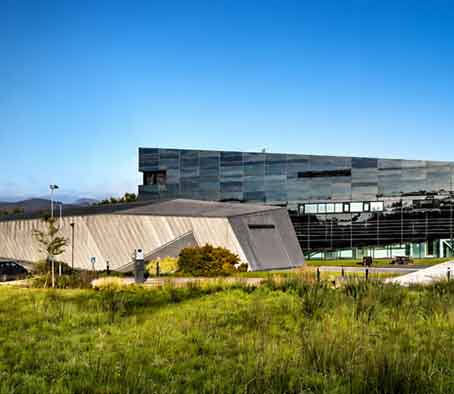
Research at the Dalton Cumbrian Facility (DCF) shows how advanced shielding materials can significantly extend the lifetime of digital imaging systems in high-radiation nuclear environments.
Impact at a glance
Challenge
Modern digital imaging systems degrade rapidly in high-radiation environments.
Solution
A multilayer shielding system combining lead and hexagonal boron nitride coatings.
Impact
A 2.5× increase in CMOS sensor lifetime under industry-relevant gamma dose rates.
Challenge
Visual monitoring is essential for the safe operation, maintenance and decommissioning of nuclear facilities. However, much of this capability relies on legacy analog cathode ray tube (CRT)-based systems, which are now becoming obsolete and increasingly difficult to maintain.
Modern digital CMOS (Complementary Metal Oxide Semiconductor) imaging systems offer clear advantages in resolution, size, and digital integration, but suffer from rapid degradation in radiation environments.
This creates a need for robust, scalable imaging technologies capable of operating under high radiation dose rates.
Solution

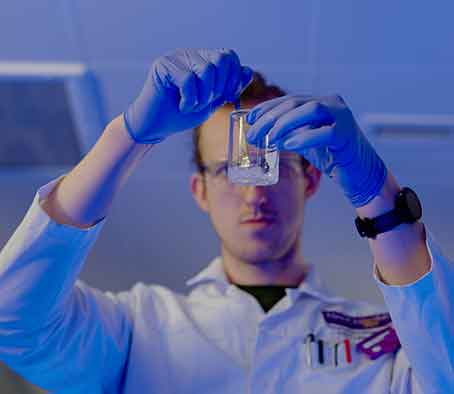
In collaboration with Custom Cameras Ltd, researchers at DCF developed a multilayer shield to protect sensitive camera components, combining lead with hexagonal boron nitride (hBN) coatings.
The research was supported through the Henry Royce Institute Industrial Collaboration Programme, which helps translate advanced materials research into industry-relevant applications.
Prototype systems were tested under in situ gamma irradiation at DCF, enabling real-time evaluation of imaging performance under realistic conditions, such as those found in a nuclear reactor core.
Advanced shielding materials
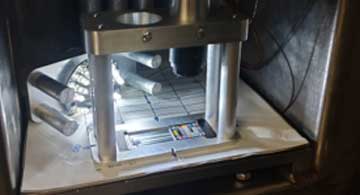
Hexagonal boron nitride is an ideal candidate for protective coatings in extreme environments because it exhibits exceptional resistance to gamma radiation.
It shows no significant structural degradation even at doses up to approximately 1500 kGy – around 1,000 times greater than the dose at which the camera would fail without the coating.
Impact
The project demonstrated a 2.5× increase in CMOS sensor lifetime under industry-relevant gamma dose rates, validating the effectiveness of the multilayer shielding approach. This provides:
- a scalable pathway to replace obsolete CRT systems with high-resolution, solid-state imaging platforms capable of integration with digital and AI-enabled monitoring tools;
- improved imaging reliability that will enhance safety, reduce maintenance interventions in hazardous environments and support more efficient reactor operation and decommissioning.
This work demonstrated how radiation-resistant 2D materials such as hBN can be translated into functional technologies, reinforcing the role of DCF in enabling impactful, application-driven innovation in extreme environments.
Continue exploring
-

Dalton Cumbrian Facility
The Dalton Cumbrian Facility provides world-leading facilities and expertise for radiation science, nuclear materials research and decommissioning.
Read more about our Dalton Cumbrian Facility
-
Decommissioning and waste
Research into the safe management, monitoring and disposal of radioactive materials and nuclear facilities.
Explore the research theme
-
All impact case studies
More examples of Dalton research delivering real-world impact across the nuclear sector.
Explore case studies